

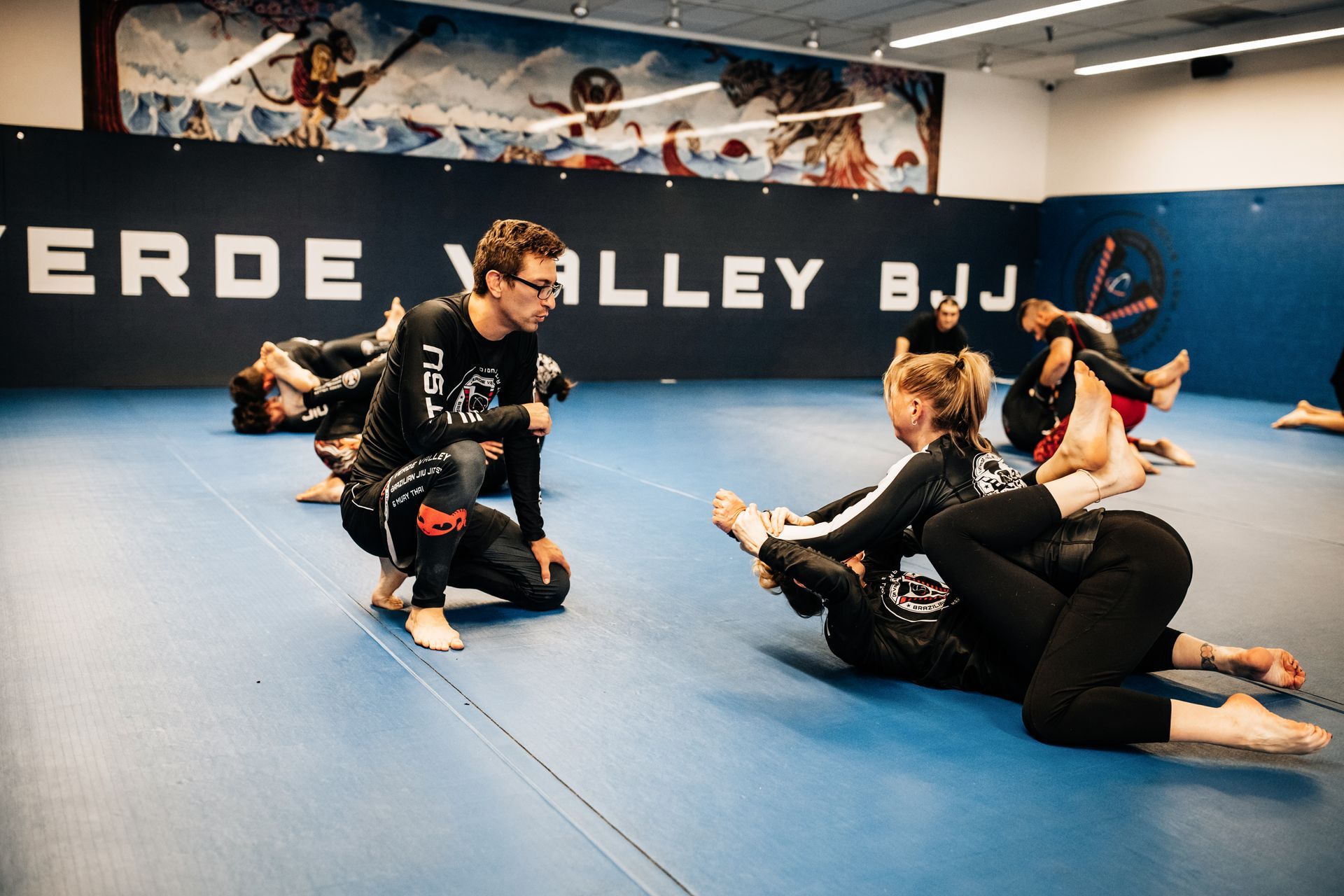
Brazilian Jiu Jitsu turns everyday kids into calm, capable leaders by teaching decision-making under pressure.
In Cottonwood, parents often tell us they want more than another after-school activity. You want something that builds follow-through, confidence, and the ability to handle tough moments without melting down or lashing out. That is exactly where Brazilian Jiu Jitsu fits, because it rewards effort, patience, and smart choices, not just raw athleticism.
Our youth classes are structured, but not stiff. Kids learn how to listen, move with control, and work with partners respectfully. Over time, those habits show up at home and school as better communication, steadier emotions, and a willingness to try again after a setback.
When families search for Brazilian Jiu Jitsu in Cottonwood, the question usually becomes simple: will this help my child grow into someone who can lead? In our experience, yes, because leadership is trained the same way technique is trained - one small, repeatable rep at a time.
Why leadership and martial arts connect so naturally
Leadership sounds like a big word for kids, but it shows up in small moments. Raising a hand in class. Owning a mistake. Helping a teammate. Choosing to walk away from drama. On the mats, those moments happen constantly, and we get to coach them in real time.
Brazilian Jiu Jitsu is especially effective because it is a problem-solving art. Positions change. Pressure changes. The right choice depends on timing and awareness. Kids learn that panicking usually makes things worse, while breathing, thinking, and taking the next best step gets them unstuck.
We also like that progress is earned, not given. That creates a kind of quiet confidence that does not need to brag. It is the confidence of “I can handle hard things,” which is the foundation of leadership in any setting.
The leadership skills we build in our youth program
Personal responsibility: showing up, paying attention, following through
A leader does not blame everyone else when things go wrong. On the mats, excuses do not help because the feedback is immediate. If your base is weak, you fall. If your guard is open, someone passes. That is not harsh - it is simply clear.
We teach kids to take ownership in a healthy way. Instead of “I lost,” we coach “What did you notice, and what will you try next time?” That shift matters. It turns frustration into learning, and learning into steady improvement.
Over weeks of training, you will often see your child start doing little leadership things at home without being asked. Packing their gear. Remembering class times. Taking pride in being prepared. Those are small wins, but they add up.
Goal-setting through belt progress and skill milestones
Belt promotions are not just about color. They are a built-in system for learning how to pursue a long-term goal without getting overwhelmed. Kids learn that big goals are really a stack of small skills: a better breakfall, a cleaner shrimp, a stronger posture, a calmer roll.
We make goals specific and doable. A child might focus on one simple theme for a month, like “keep my elbows in” or “reset my guard when I get knocked off balance.” When kids start hitting those targets, they learn a leadership lesson that transfers directly to school: progress comes from consistent work, not last-minute panic.
Here is what goal-setting looks like in practice:
• Your child learns the move in a step-by-step format, not a rushed info dump
• Our coaches give one or two clear cues to focus on, so attention stays sharp
• Kids track progress by noticing what happens during live rounds, not guessing
• We celebrate effort and improvement, so motivation stays internal instead of fragile
• Belt promotions become meaningful markers of commitment, not participation trophies
Resilience: losing safely and learning faster because of it
One of the most underrated leadership skills is being able to fail without collapsing. In Brazilian Jiu Jitsu, kids tap, reset, and go again. That cycle teaches a no-quit mindset in a way that feels normal, not dramatic.
Resilience is not about pretending things are easy. Some days are hard. Some days your child will feel clumsy or behind. We keep the environment supportive and structured so kids learn to tolerate frustration and stay engaged anyway. Over time, that becomes emotional strength: the ability to keep trying even when confidence wobbles.
Parents often notice this resilience in school projects and sports. Instead of giving up quickly, kids start asking better questions, taking feedback, and sticking with the process.
Decision-making under pressure: thinking while tired, staying calm while stuck
Leadership is rarely tested when everything is comfortable. It is tested when the room is loud, the clock is ticking, and you feel behind. That is what sparring, or rolling, teaches in a safe and supervised way.
Kids learn to make choices while breathing hard and dealing with resistance. That is real skill. We coach them to slow their minds down and focus on priorities: posture, frames, escapes, and control. When your child learns to think clearly under physical pressure, daily stress feels less overwhelming too.
This is a big reason Brazilian Jiu Jitsu builds confidence that lasts. It is not confidence based on compliments. It is confidence built through experience.
How “leading by example” shows up on the mats
In a healthy academy culture, senior students naturally become role models. Not because we hand them a title, but because their behavior is visible. Younger kids notice who stays respectful, who listens, who helps partners, and who trains with control.
We guide older kids to mentor in simple, practical ways. How to help a newer student tie a belt. How to drill with someone smaller. How to stay calm when someone makes a mistake. Those actions teach leadership the right way: service first, ego last.
And for shy kids, this is huge. Mentorship gives them a reason to speak up that does not feel forced. Instead of “be confident,” the message becomes “help your partner,” and confidence grows naturally from there.
Respect and communication: the hidden curriculum that matters most
If you only look at techniques, you miss what is really happening. A quality class teaches respectful routines: lining up, listening, taking turns, using polite language, and keeping your hands to yourself unless the drill calls for contact.
Those routines are not fluff. They are leadership habits. In Cottonwood schools, group projects and classrooms reward kids who can regulate themselves and communicate clearly. On the mats, we practice those skills every session.
We also emphasize safe intensity. Kids can train hard without being reckless. That balance is a life skill. It teaches that real strength includes self-control.
What age-by-age leadership growth can look like
Kids develop at different speeds, and we do not force adult expectations onto young students. We meet kids where they are and build from there.
Littles: coordination, patience, and simple choices
Younger kids often start by learning how to wait their turn and follow directions. That sounds basic, but it is foundational leadership. If a child can pause, listen, and try again, everything improves. We keep classes active, playful, and structured so attention grows without constant lecturing.
Preteens: resilience, teamwork, and social confidence
This is the age where peer dynamics get complicated. Training gives preteens a place to practice being a good partner and handling wins and losses gracefully. We see kids become more comfortable speaking, asking questions, and taking responsibility for their progress.
Teens: accountability, self-management, and calm presence
Teens are close to adulthood, and leadership becomes more real. Showing up consistently matters. Being a good training partner matters. Teens learn how to manage stress, solve problems in real time, and carry themselves with confidence that does not need to posture.
If your teen is also interested in striking, our Muay Thai options can complement grappling by building discipline, conditioning, and composure. The leadership lesson is the same: steady work beats shortcuts.
How long it takes to notice leadership changes
Every child is different, but consistency is the common denominator. If your child trains two to three times per week, many families notice meaningful changes in a few months. The first changes are often simple: better listening, improved posture, fewer emotional spikes when something feels unfair.
As training continues, the leadership growth becomes more obvious. Kids start handling pressure better. They speak with more clarity. They recover faster from mistakes. They become the kind of teammate and classmate you can count on.
If you are curious about the practical time commitment, our class schedule is designed to fit busy Cottonwood families, with options that work alongside school and other activities.
Safety, inclusivity, and the kind of confidence we want kids to build
We take safety seriously because confidence should come from skill, not from chaos. Classes are supervised, techniques are taught progressively, and we match partners thoughtfully. Kids learn how to train with control and how to tap early, which is a surprisingly powerful lesson in boundaries and self-advocacy.
We also keep the environment welcoming. Not every future leader is loud. Some are quiet, observant, and steady. Brazilian Jiu Jitsu gives those kids a place to grow without needing to become someone else.
And if you are also looking for adult Brazilian Jiu Jitsu in Cottonwood, many parents enjoy training alongside their kids, even if classes are separate. It is a shared lifestyle that supports discipline at home without constant nagging.
Take the Next Step
Leadership is not a switch your child flips on one day. It is a pattern built through repetition: listening, trying, failing safely, adjusting, and showing up again. That is the daily rhythm we create on the mats, and it is why Brazilian Jiu Jitsu in Cottonwood can be such a strong foundation for confident, respectful youth.
When you are ready, we would love to help your child build those skills in a supportive environment at Verde Valley Brazilian Jiu Jitsu and Muay Thai. You can explore our programs, check the class schedule, and get a feel for our training style on the website, then step in for a first class when it feels right.
Train with experienced instructors and a supportive community by joining a Brazilian Jiu-Jitsu class at Verde Valley Brazilian Jiu Jitsu and Muay Thai.