
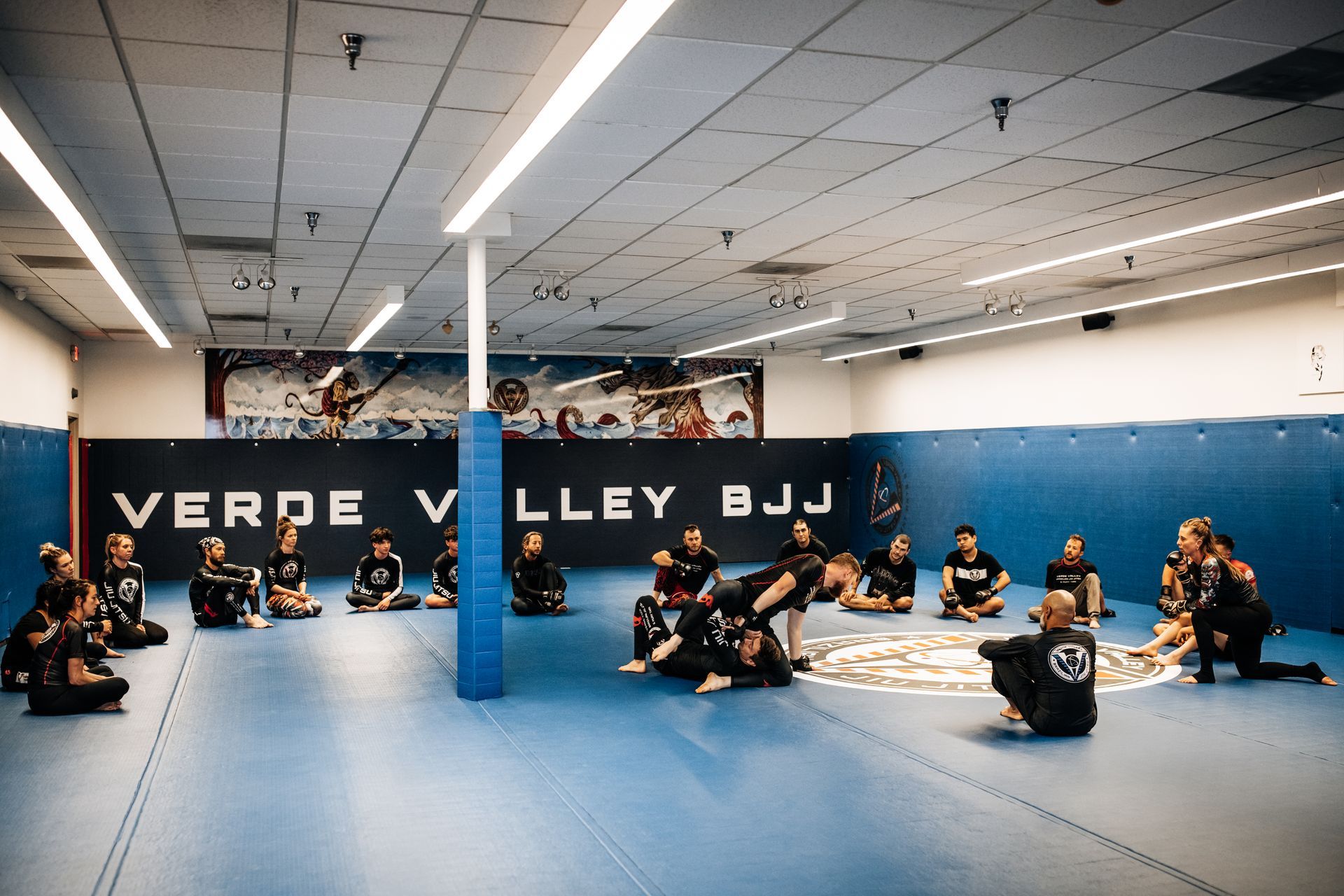
A smart, scalable grappling art can help you stay steady on your feet, strong in your body, and sharp in your mind.
If you have ever wondered whether Brazilian Jiu Jitsu is realistic for your body after 50, you are not alone. We hear questions about knees, shoulders, balance, and whether starting something new will feel intimidating or, frankly, risky. Those concerns are valid, and we take them seriously in every class.
At the same time, more older adults around Cottonwood are looking for training that feels practical and sustainable, not punishing. Brazilian Jiu Jitsu fits that goal because progress comes from leverage, positioning, and timing rather than impact or brute force. You can train hard, but you can also train intelligently, and that difference matters as our priorities shift toward longevity.
One important note: we cannot point to a published study proving a Cottonwood-specific surge in seniors joining. What we can do is share what we see on the mats, explain why the art works so well for older beginners, and show you how we structure training so you can learn safely and confidently.
Why Brazilian Jiu Jitsu makes sense for aging bodies
Brazilian Jiu Jitsu is often called a thinking person’s martial art, and that is not just a catchy phrase. Most of the work happens through control, angles, and problem-solving under pressure. When we coach you to rely on structure instead of strength, your joints usually feel better than you expect, especially compared to high-impact workouts.
Because BJJ is primarily grappling, you are not absorbing repetitive strikes. Instead, you learn how to manage distance, frames, grips, posture, and balance. The training is close-range and controlled, and that gives us a lot of room to scale intensity based on how you feel that day.
We also like that BJJ is measurable. You can feel improvements in simple things like getting up from the floor more smoothly, moving your hips with less stiffness, or maintaining base while someone tries to off-balance you. Those wins add up quickly.
What seniors are actually looking for and why BJJ checks the boxes
By the time you hit your 50s or 60s, “getting in shape” usually stops being about aesthetics. Most people want to feel capable: walking confidently on uneven ground, keeping up with grandkids, protecting a shoulder that has taken a few hits over the years, or just having a routine that makes the week feel better.
In our adult program, we see a few common motivations show up again and again:
• Functional strength that supports daily movement, not just gym numbers
• Balance and fall-prevention skills, especially in unpredictable real-life positions
• A community routine that is mentally engaging, not monotonous
• Self-defense confidence without needing to be explosive or athletic
• A practice that rewards patience and consistency over intensity
This is a big reason adult Brazilian Jiu Jitsu in Cottonwood has become such a strong fit for retirees and working professionals alike. The art meets you where you are, and it still gives you a real path forward.
Safety first: how we keep training senior-friendly without making it “watered down”
Safety in Brazilian Jiu Jitsu is not about avoiding challenge. It is about choosing the right kind of challenge at the right time. We coach you to build habits that reduce risk, like tapping early, moving with control, and selecting training partners who match your pace.
We also manage variables that matter more as you age: speed, range of motion, and fatigue. When fatigue rises, decision-making drops, and that is when awkward positions happen. So we structure sessions so you can learn while you still feel in control.
A few adjustments we commonly make for older beginners
We keep the training real, but we do not pretend every body is the same. Depending on your history, we might suggest:
• Starting from knees or seated positions during certain drills to reduce takedown impact
• Modifying guard work to protect hips, knees, or lower back
• Emphasizing posture and framing before adding any speed
• Using positional sparring rather than open rolling right away
• Encouraging recovery-focused pacing, especially in your first month
If you bring in a concern like arthritis, a past shoulder surgery, or “my neck gets cranky sometimes,” we plan around it. You should not have to guess whether a movement is smart for you.
The real benefit seniors notice first: balance, base, and getting comfortable on the ground
One underrated skill in Brazilian Jiu Jitsu is simply learning to be on the ground without panicking. For many adults, the floor starts feeling far away as the years go on, and getting down and back up can feel uncertain.
BJJ changes that by teaching you to move in grounded positions with intention. You learn how to create base with your hands, elbows, and hips. You learn how to turn, shrimp, bridge, and frame, which are not just “martial arts moves.” They are ways to organize your body under load.
That translates directly to fall prevention. We cannot guarantee you will never slip, of course, but we can help you build the reflexes and strength to recover position, protect yourself, and stay calm.
Strength and mobility, but in a joint-friendly way
A lot of standard fitness advice for seniors is good, but also repetitive. Walk more. Lift light weights. Stretch. Those are useful, yet they do not always keep people engaged.
Brazilian Jiu Jitsu stays interesting because you are solving problems with another person. Your grip improves because you use it. Your core strengthens because you are constantly managing posture. Your hips loosen because movement is built into the technique, not tacked on at the end.
Over time, we often see improvements in:
• Grip endurance and forearm strength
• Hip mobility and trunk rotation
• Posterior chain strength from bridging and base-building
• Coordination and footwork during transitions
• Neck and shoulder awareness through better posture habits
And because you are learning technique, not just “working out,” you are less likely to chase intensity for intensity’s sake. That is a quiet win.
The mental side: why BJJ feels like a reset button
Seniors often tell us they like the mental clarity that comes from training. BJJ demands attention. When you are learning how to escape side control or keep your posture in someone’s guard, your brain is not replaying the day’s stress.
There is also something satisfying about being a beginner again. It can be humbling, sure, but it is also energizing. You see progress quickly when you show up consistently, and that progress is tangible. You either held base longer, escaped cleaner, or remembered a detail that worked.
In many ways, Brazilian Jiu Jitsu in Cottonwood is as much about staying mentally flexible as it is about staying physically capable.
BJJ vs Muay Thai for older adults: choosing the right emphasis
We teach both grappling and striking, and each has its place. For many seniors, BJJ becomes the foundation because it is lower impact by nature and heavily technique-driven. Muay Thai can still be a great option, especially when we control intensity, focus on pads, and prioritize movement quality.
If your main goal is longevity and joint-friendly training, BJJ is often the easier starting point. If your goal includes cardiovascular work and striking mechanics, we can layer Muay Thai in thoughtfully once your base fitness and comfort are there.
You do not have to pick a “forever lane” on day one. What matters is starting in a way that feels safe, sustainable, and motivating.
What a first month can look like in our adult fundamentals program
Starting is usually the hardest part. Not because the techniques are impossible, but because walking into a new environment can feel like a lot. We keep onboarding simple and we teach fundamentals in a way that does not assume you already know the culture or the vocabulary.
Here is a realistic first-month roadmap that works well for many older beginners:
1. Week 1: Learn safe movement, basic positions, and how to tap early and clearly
2. Week 2: Add simple escapes and posture concepts, plus controlled drilling
3. Week 3: Introduce positional sparring with specific goals and low intensity
4. Week 4: Start connecting techniques into small sequences you can repeat
You will sweat, but you should not feel destroyed. You should leave feeling like you learned something and could come back in two days without dreading it.
Common questions we hear from seniors in Cottonwood
Is Brazilian Jiu Jitsu safe if I have joint issues?
It can be, as long as you train with good coaching, good partners, and smart intensity. We encourage you to tell us what is going on with your body so we can help you modify. Tapping early is a skill, not a weakness.
Do I need to be in shape before I start?
No. Training is how you get in shape. We scale the pace so you can build conditioning over time instead of trying to “test” yourself on day one.
Will I be the oldest person in class?
Not necessarily, and even if you are, it is rarely a problem. Adults come from all backgrounds. What matters is that you are consistent and willing to learn.
How often should I train as a beginner?
For most seniors, two classes per week is a strong start. It is frequent enough to build momentum and not so frequent that recovery becomes a barrier.
Building a routine you can actually keep
Longevity training is not about hero workouts. It is about repeatable habits. We would rather see you train twice a week for a year than crush yourself for two weeks and disappear for two months.
A few practical suggestions that help seniors stick with Brazilian Jiu Jitsu:
• Arrive early so you can warm up gradually and ask questions without rushing
• Keep your first goal simple, like learning positions and breathing calmly under pressure
• Focus on defense first, because it reduces panic and reduces injury risk
• Track small improvements, like smoother movement or better posture, not just submissions
• Respect recovery: sleep, hydration, and light mobility work make a real difference
If you have been searching for adult Brazilian Jiu Jitsu in Cottonwood, this is the kind of approach that keeps training enjoyable and sustainable.
Take the Next Step
If you want a practice that builds balance, confidence, and real-world capability without relying on high impact, our classes are built for that. We keep Brazilian Jiu Jitsu technical, structured, and welcoming, especially for older beginners who want clear coaching and a smart pace.
When you are ready, we would love to help you start in a way that fits your body and your goals at Verde Valley Brazilian Jiu Jitsu and Muay Thai. Check the website for details, look over the program options, and come see what training can feel like when it is challenging in the right way.
Build real grappling skills and improve your technique by joining a Brazilian Jiu-Jitsu program at Verde Valley Brazilian Jiu Jitsu and Muay Thai.